
Global demand for Lip Filler Aesthetic products is growing, but responsible sourcing requires more than comparing prices. Buyers must examine product composition, manufacturing controls, sterility evidence, packaging quality, and market authorization. A visually attractive syringe means little without traceable batch records and dependable cold-chain handling.
Dr. Arthur Swift, a respected aesthetic physician, often emphasizes, “The best lip enhancement is the one that remains natural.” This principle matters during global procurement. A suitable product should support controlled volume, smooth integration, predictable handling, and refined results. Hyaluronic acid fillers may differ in concentration, cross-linking technology, particle structure, and injection behavior. Those differences affect product selection and clinical performance.
This guide reviews ten Lip Filler Aesthetic products and compares their sourcing relevance. It considers manufacturer reputation, regulatory documentation, distributor reliability, training support, and regional availability. It also highlights practical details, such as tamper-evident seals, readable expiry dates, multilingual labels, and temperature-sensitive delivery records. Small details matter.
Not every popular product is appropriate for every market. A strong brand may still have limited registration in a specific country. A lower purchase price may hide customs delays, weak after-sales support, or uncertain authenticity. That deserves reflection. Global sourcing is not simply a procurement task; it is a patient-safety responsibility. Buyers should verify local regulations and consult qualified medical professionals before making product or distribution decisions.
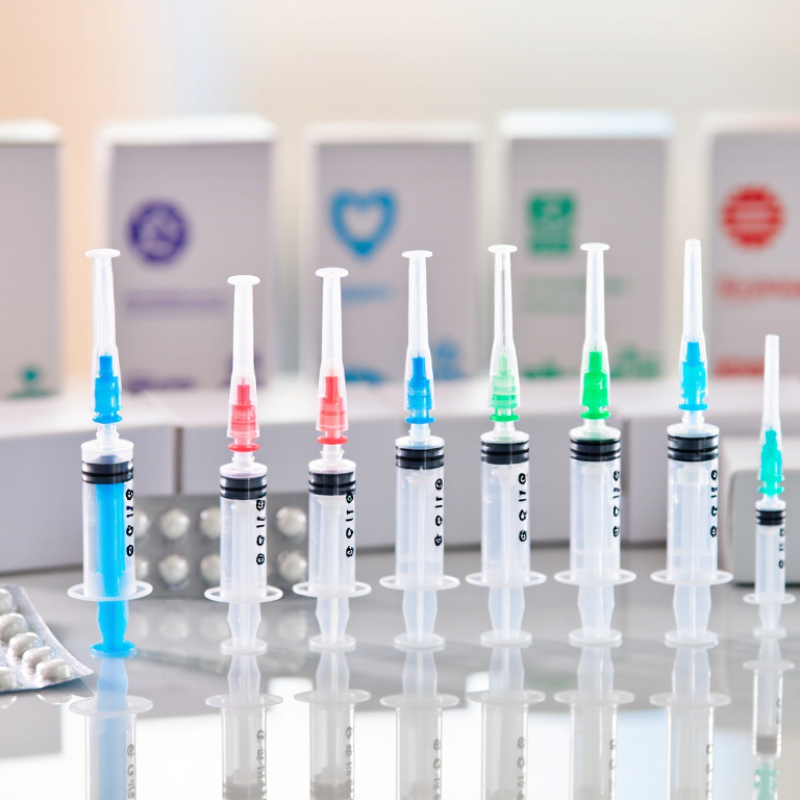
Lip filler aesthetic products are regulated medical devices or injectable materials designed to add volume, improve contour, or soften visible lip asymmetry. Their scope usually includes sterile dermal fillers, prefilled syringes, compatible needles, cannulas, and essential packaging. Some sourcing teams also review topical anesthetic products and post-treatment care materials. These items should not be treated as ordinary cosmetics.
The most common filler category uses hyaluronic acid, a biodegradable substance selected for its established clinical use. Product evaluation should examine composition, concentration, particle structure, sterility, expiry date, storage temperature, and lot traceability. Clear instructions for use matter. So does dependable documentation.
Qualified healthcare professionals should assess suitability, contraindications, and patient risk. A responsible buyer verifies manufacturing quality systems, regulatory status, import requirements, and adverse-event reporting procedures in each target market. Requirements differ widely. They can change.
Practical sourcing checks include reviewing sealed packaging, readable labels, tamper evidence, and temperature records during transport. Supplier communication should be documented, not based on attractive claims alone. Clinical evidence may support a product, but it does not remove the need for professional judgment. The boundary between filler and supporting product is not always neat. A sourcing list can still miss training, storage, or follow-up needs. That is where careful review becomes essential.
Definition and scope: Lip filler aesthetic products are injectable or procedure-support products intended to enhance lip volume, improve lip contour, soften perioral lines, correct asymmetry, or support lip hydration. This table focuses on commonly sourced product categories and formulation profiles used in professional aesthetic practice. Regulatory classification, permitted indications, injection depth, shelf life, and purchasing requirements vary by market and product authorization.
| Rank | Product Category | Core Material or Format | Typical Aesthetic Purpose | Common Product Characteristics | Typical Effect Duration | Professional Sourcing Considerations | Scope Classification |
|---|---|---|---|---|---|---|---|
| 1 | Soft Cross-Linked Hyaluronic Acid Lip Filler | Cross-linked hyaluronic acid gel with a soft, tissue-compatible rheology | General lip augmentation, hydration, contour definition, and correction of mild asymmetry | Injectable gel Reversible with hyaluronidase Soft consistency | Commonly several months to around one year, depending on formulation, metabolism, technique, and treatment area | Verify authorized indication, sterility, endotoxin controls, lot traceability, needle or cannula configuration, and storage requirements | Primary lip-volume filler category |
| 2 | Low-Viscosity Hyaluronic Acid Lip Filler | Less dense or lower-viscosity cross-linked hyaluronic acid gel | Subtle augmentation, vermilion-border refinement, and correction of fine lip lines | Subtle volume Smooth spread Low projection | Often several months to approximately one year, subject to individual and product-specific factors | Assess extrusion force, gel cohesivity, particle or gel uniformity, packaging integrity, and suitability for superficial injection | Fine-contour and natural-result category |
| 3 | High-Cohesivity Hyaluronic Acid Lip Filler | Cross-linked hyaluronic acid gel formulated for greater shape retention and tissue integration | Defined lip projection, structural support, and correction of noticeable volume loss | Shape retention Higher lift Moderate-to-firm gel | Commonly several months to more than one year, depending on product design and patient factors | Confirm that the authorized indication matches lip use; review rheology, injection depth, training requirements, and adverse-event reporting procedures | Structural lip-enhancement category |
| 4 | Hyaluronic Acid Lip Hydration Booster | Low-concentration or lightly cross-linked hyaluronic acid injectable preparation | Improvement of lip hydration, surface smoothness, and fine texture rather than major volume increase | Low-volume effect Hydration-focused Fine injections | Usually shorter than a conventional structural filler and may require a treatment series | Differentiate injectable medical devices from topical cosmetics; verify injection protocol, sterility, needle size, and legally permitted claims | Lip-skin quality and hydration category |
| 5 | Non-Animal-Stabilized Hyaluronic Acid Filler | Hyaluronic acid produced through controlled microbial fermentation and stabilized for injectable use | Lip augmentation and contouring for purchasers prioritizing non-animal sourcing characteristics | Fermentation-derived Biocompatible polymer Injectable | Typically several months to around one year or longer, depending on cross-linking and clinical variables | Request raw-material origin statements, residual-protein controls, bioburden data, sterility documentation, and regulatory certificates | Material-origin specification category |
| 6 | Lidocaine-Containing Hyaluronic Acid Lip Filler | Hyaluronic acid gel combined with a local anesthetic such as lidocaine, where permitted | Lip augmentation or contouring with the aim of improving injection comfort | Anesthetic-containing Single-use sterile syringe Comfort-oriented | Comparable to the underlying hyaluronic acid formulation, commonly several months to around one year | Check local rules for medicinal ingredients, anesthetic concentration, contraindications, labeling language, and pharmacovigilance obligations | Combination injectable product category |
| 7 | Monophasic Hyaluronic Acid Lip Filler | Uniform single-phase cross-linked hyaluronic acid gel | Even distribution for lip volume, border refinement, and smooth contour transitions | Uniform gel Smooth integration Versatile use | Commonly several months to approximately one year, with variation by formulation and patient metabolism | Compare gel homogeneity, extrusion force, particle profile, syringe performance, and evidence supporting the intended lip application | General-purpose formulation category |
| 8 | Biphasic or Particle-Structured Hyaluronic Acid Filler | Hyaluronic acid gel containing cross-linked particle structures within a carrier phase | Localized contouring and volume enhancement where greater particulate structure is intended | Particle-structured Localized placement Variable cohesivity | Often several months to around one year, influenced by particle size, cross-linking, technique, and tissue movement | Review particle-size data, injection-depth restrictions, cannula or needle compatibility, and evidence regarding lump or nodule management | Structured-gel formulation category |
| 9 | Calcium Hydroxylapatite-Based Injectable Filler | Calcium hydroxylapatite microspheres suspended in a water-based gel carrier | Selected facial soft-tissue correction and structural support; lip use requires careful indication and market-specific authorization | Biostimulatory component Not dissolved by hyaluronidase Specialist use | Commonly around one year or longer, depending on treatment area, formulation, and patient response | Confirm explicit lip authorization before sourcing; require specialist training, complication protocols, and clear information on reversibility limitations | Alternative injectable filler category; conditional lip scope |
| 10 | Poly-L-Lactic Acid Injectable Biostimulator | Biodegradable poly-L-lactic acid microparticles reconstituted for injection | Gradual collagen-stimulation approach for facial volume deficiency; direct lip injection is market- and technique-dependent | Gradual result Biostimulatory Not immediate gel volume | Effects may develop over weeks and can persist for approximately one to two years or longer in some clinical applications | Do not classify it as a conventional immediate lip filler; verify authorized treatment areas, reconstitution instructions, training, and nodule-prevention protocols | Adjacent biostimulator category; restricted lip scope |
Note: Duration ranges are broad industry and clinical-use estimates rather than guarantees. Product availability, regulatory status, permitted indications, packaging specifications, and import documentation should be confirmed in the destination market before global sourcing.
They are regulated medical devices or injectable materials for lip volume, contour, or asymmetry. They are not ordinary cosmetics. Common items include sterile gels, prefilled syringes, needles, cannulas, and packaging.
Common categories include soft hyaluronic acid gel, medium-density gel, hydration-focused filler, border filler, and contour gel. Other options include flexible-rheology products, cannula-compatible fillers, and prefilled syringe systems. Each has different handling needs.
Check composition, concentration, particle structure, syringe volume, sterility, expiry date, and storage temperature. Request batch records and traceability documents. Names can sound impressive. Evidence matters more.
Soft gel may support natural movement and subtle hydration. Medium-density gel can create stronger definition but may feel less flexible. Flexible rheology should support smiling, speaking, and eating. Results still depend on technique.
Inspect sealed packaging, readable labels, tamper evidence, lot numbers, and expiry dates. Review transport temperature records and shipping validation. A damaged seal deserves attention. Cold-chain history can be incomplete.
Request composition data, sterility validation, biocompatibility testing, manufacturing records, and batch-release results. Review complaint handling and recall procedures. An ISO quality certificate alone does not prove market authorization.
Qualified healthcare professionals should review patient suitability, contraindications, injection depth, and potential risks. Product documents cannot replace clinical judgment. Training matters. Follow-up planning matters too.
Confirm authorization, manufacturer registration, import requirements, and licensed clinical use in the destination market. Check local labeling, post-market surveillance, unique identification, and representative requirements when applicable. Rules change.
Review complaint reports, adverse-event procedures, temperature records, and traceability regularly. Supplier audits should examine cleanrooms, sterilization controls, and recall readiness. Photos are not enough. A perfect scorecard does not exist.
This guide presents a practical overview of Lip Filler Aesthetic products for international sourcing, covering their definition, intended professional applications, and major categories such as hyaluronic acid-based fillers, hydration-focused injectables, and complementary lip-care solutions. It highlights ten representative product types by comparing their core characteristics, including formulation, texture, longevity, application focus, packaging, and storage requirements. The discussion is designed to help buyers understand how product features align with different clinical and cosmetic needs without promoting any specific brand.
The guide also emphasizes safety, quality control, and regulatory compliance throughout the sourcing process. Key considerations include verified manufacturing credentials, ingredient traceability, sterility controls, stability testing, clear labeling, product documentation, and compliance with the destination market’s applicable rules. It further explains how to evaluate suppliers through audits, samples, certifications, communication, minimum order quantities, and after-sales support. Finally, it addresses logistics planning, including temperature management, protective packaging, shipment documentation, customs coordination, and delivery reliability, enabling buyers to build a responsible and efficient global sourcing strategy.
