
Explore our leading catalog of certified cosmetic and pharmaceutical grade Sodium Hyaluronate and targeted skin-whitening active ingredients.
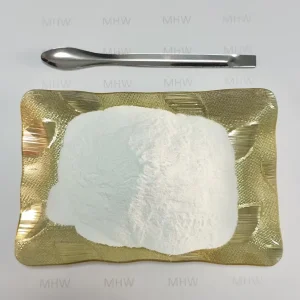
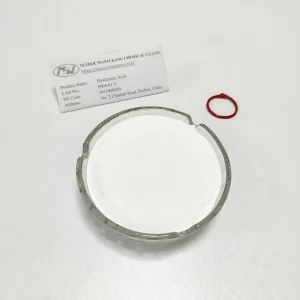
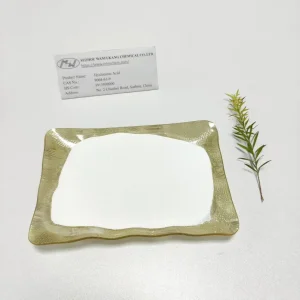
The global market for joint health, sports nutrition, and clinical cosmetics has transitioned from simple, single-ingredient supplements to highly sophisticated, multi-ingredient synergistic matrix complexes. Chief among these complexes is the tri-active formulation of Glucosamine, Chondroitin Sulfate, and Hyaluronic Acid (HA). As global demographics shift toward aging populations in North America, Europe, and Northeast Asia, combined with an unprecedented rise in preventative athletic wellness, the procurement demand for these raw biomaterials is scaling exponentially.
Procurement officers and formulation scientists require distinct molecular specifications to satisfy regulatory, functional, and sensory profiles. Glucosamine provides the essential cellular precursor units for glycosaminoglycan synthesis. Chondroitin acts as the osmotic shock absorber within the collagen matrix, retaining vital fluid in cartilage. Hyaluronic Acid acts as the primary mechanical lubricant within the synovial fluid and intercellular matrix. Together, these three compounds exhibit structural symbiosis. However, securing stable supply chains with strict molecular weight consistency, non-animal-derived origins (vegan compliance), and heavy metal clearance remains a primary challenge for modern procurement executives.
"The integration of these three active ingredients demands precise matrix stability. Minor shifts in pH, particle size, or moisture content can compromise shelf-life efficacy and visual suspension in liquid or softgel forms. Suzhou Wanfukang Chemical Co., Ltd. addresses this challenge by providing highly customized molecular weight fractions designed specifically for complex matrix formulations."
Global bulk distributors look beyond standard purity metrics. High-efficacy joint formulations require Glucosamine Hydrochloride (HCl) or Glucosamine Sulfate Potassium Chloride with a crystalline assay exceeding 98.5%. Chondroitin Sulfate must comply with strict USP or EP standards, typically requiring CPC (Cetylpyridinium Chloride) or enzymatic HPLC analysis to verify exact cartilage origin (Bovine, Avian, or Marine) and prevent adulteration. Hyaluronic Acid requires optimization across three molecular brackets: High Molecular Weight (HMW) for topical moisture retention, Medium Molecular Weight (MMW) for tissue repair signaling, and Low/Oligo Molecular Weight (LMW) for deep-tissue penetration.
A premier global supply partner for advanced cosmetic, food-grade, and pharmaceutical-grade active ingredients.
Modern health science rejects the isolated application of joint support ingredients. In vivo studies confirm that a co-formulated oral dosage containing Glucosamine, Chondroitin, and Hyaluronic Acid works synergistically to downregulate pro-inflammatory cytokines such as TNF-α and IL-1β. This pathway helps preserve cartilage extracellular matrices far more effectively than any of these compounds can achieve individually.
To meet these clinical parameters, manufacturers must adapt formulations for targeted drug delivery systems. We classify these solutions into three macro-industry branches:
Requires high-density, granular Glucosamine and Chondroitin to ensure compressibility. Hyaluronic acid must possess high stability profiles to withstand structural pressures during compression without undergoing thermal degradation.
Demands ultra-soluble, low-viscosity materials. Hydrolyzed Hyaluronic Acid (Cosmetic Assay >95%) provides rapid dispersion. It prevents precipitation and ensures uniformity throughout the shelf life of the beverage or liquid supplement.
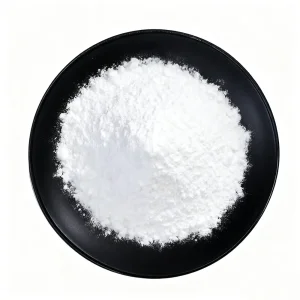
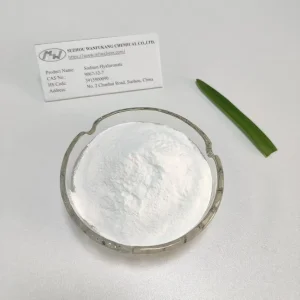
Utilizes Pure Vegan Sodium Hyaluronate and Short-chain Hyaluronic Acid to hydrate the dermal layers. These materials support the synthesis of endogenous collagen, serving both topical cosmetic and oral beauty formulations.
The production of these biopolymers is undergoing a significant biotechnological shift. Historically, chondroitin and hyaluronic acid were derived from animal tissues (such as bovine trachea and rooster combs). This legacy extraction route carried risks of transmissible spongiform encephalopathies (TSE), allergen carryover, and batch-to-batch inconsistency.
The current technical roadmap points toward microbial cell factories. Streptococcus zooepidemicus and engineered Bacillus subtilis strains are utilized in precision fermentation systems to synthesize high-purity Sodium Hyaluronate. This bio-fermented vegan-grade HA completely eliminates animal allergen vectors.
Similarly, advanced research is focused on the enzymatic synthesis of Chondroitin Sulfate from bacterial capsular polysaccharides. This process optimizes the sulfation pattern (specifically targeting the A and C ratios: chondroitin-4-sulfate and chondroitin-6-sulfate). These bio-synthetic routes ensure a standardized charge density, which is critical for target tissue bio-absorption.
Ensuring compliance, chemical consistency, and international logistics efficiency from development to final product delivery.
Our quality processes meet strict market and customer requirements. We utilize internal HPLC and FTIR testing, complemented by accredited third-party laboratories, to ensure every batch aligns with USP, EP, and FCC specifications.
Our shipping methods are optimized by destination country, responding dynamically to local customs standards. We utilize climate-controlled, protective packaging to shield active compounds from temperature and humidity spikes during transit.
Our catalog includes raw material powders and specialized liquid formulations. This allows us to serve diverse market segments, from industrial-scale food processing to clinical dermatology and laboratory research applications.
We provide full-lifecycle client support. Our technical and sales teams guide clients from early-stage recipe formulations and compliance checks through to final shipment logistics and on-site factory audits.
We prioritize client risk mitigation. If a batch fails to meet verified specifications in local testing, we initiate our expedited reshipment process. This includes replacing the material at no additional charge and covering all associated logistics fees.
Navigating regulatory requirements is a critical step in the supply chain for international manufacturers. Glucosamine, Chondroitin, and Hyaluronic Acid are subject to varying compliance systems depending on their end-use classification (dietary supplements, food additives, medical devices, or active pharmaceutical ingredients).
In the United States, raw materials must satisfy FDA GRAS (Generally Recognized as Safe) notifications or be backed by comprehensive New Dietary Ingredient (NDI) filings. In the European Union, the European Food Safety Authority (EFSA) enforces strict health claim verifications, requiring raw materials to be manufactured in facilities compliant with ISO 9001, FSSC 22000, or EU GMP. Furthermore, manufacturers targeting the premium cosmetics sector must ensure their Sodium Hyaluronate meets COSMOS and ECOCERT standards to satisfy the global demand for clean, vegan beauty.
To maintain consistent international delivery, Suzhou Wanfukang Chemical Co., Ltd. coordinates localized warehouses and logistics centers. This helps mitigate supply disruptions caused by changes in shipping lanes or customs procedures. Every raw material batch is accompanied by a comprehensive document package, including a Certificate of Analysis (CoA), Safety Data Sheets (SDS), Kosher/Halal certifications, and BSE/TSE-Free declarations.
Explore our specialized range of high-assay oral health raw materials, edible grade powders, and pharmaceutical grade formulations.
Crucial biochemical and logistical answers to support procurement operations.
Connect with our engineering and sourcing teams. We will provide detailed CoA documents, custom pricing models, and sample materials for your product development trials.