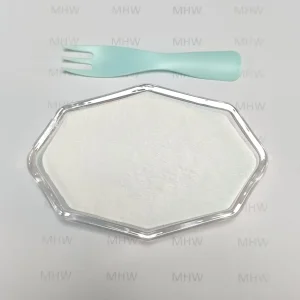
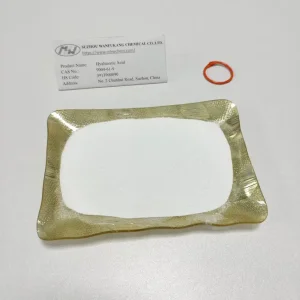
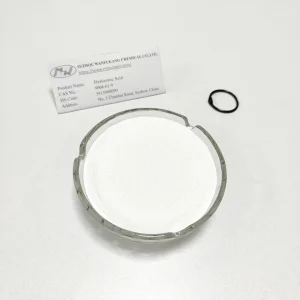
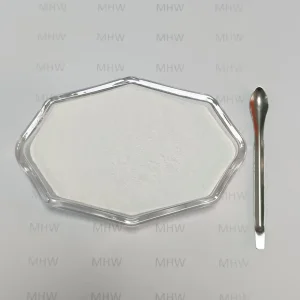
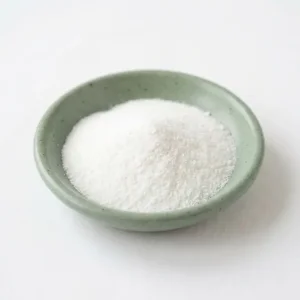
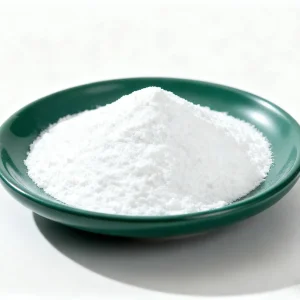
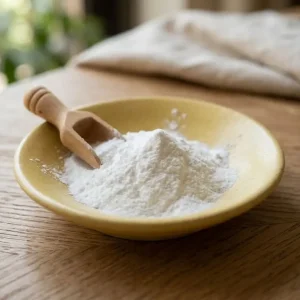
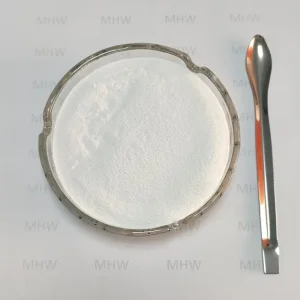
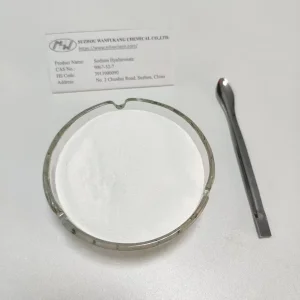
Explore our leading export-grade cosmetic and food-grade raw materials optimized for combination with alpha-hydroxy acids (AHAs).
Modern cosmetic formulation chemistry revolves around maximizing bio-availability while mitigating epidermal barrier disruption. The combination of Glycolic Acid (an alpha-hydroxy acid with the smallest molecular weight among its class) and Hyaluronic Acid (a powerful glycosaminoglycan humectant) represents a gold standard in dermatological efficacy.
Glycolic Acid functions by cleaving desmosomes—the cellular junctions holding dead keratinocytes together. By promoting rapid desquamation of the stratum corneum, it reveals a fresh, receptive epidermal layer. However, this process transiently increases trans-epidermal water loss (TEWL) and compromises the skin barrier.
This is where our ultra-pure Sodium Hyaluronate grades become indispensable. By supplying varying molecular weights of Hyaluronic Acid, formulators can construct a dual-action matrix: High Molecular Weight HA forms a non-occlusive, protective film on the freshly exfoliated surface to halt TEWL, while Low Molecular/Oligo HA penetrates into the deeper layers of the epidermis to replenish intracellular moisture pools, stimulate endogenous HA synthesis, and soothe irritation induced by the acid's low pH environment.
How Glycolic Acid's micro-exfoliation pathfinder mechanism allows optimized penetration of low molecular weight Sodium Hyaluronate.
Combining Glycolic Acid (active at pH 3.0 to 4.0) with Sodium Hyaluronate requires precise chemical balancing. At extremely low pH levels, standard Hyaluronic Acid polymers can undergo acid-catalyzed hydrolysis, breaking down the long polymer chains and reducing viscosity and film-forming efficacy. As a premium manufacturer, Suzhou Wanfukang Chemical Co., Ltd. offers specialized cross-linked and acetylated grades (such as our Acetylated Sodium Hyaluronate HA Powder) that exhibit superior stability in acidic formulations. This ensures that the hydrating matrix remains intact, delivering sustained hydration alongside the exfoliating power of Glycolic Acid.
Diving deep into the macro-economics and supply-chain structures of active cosmetic raw materials.
Global beauty conglomerates and regional indie brands alike are shifting away from simplistic single-active serums toward multifunctional complexes. Consumers now demand clinically validated results with minimal downtime, accelerating the demand for products featuring Glycolic Acid and Hyaluronic Acid together.
From a procurement perspective, this requires sourcing raw materials that meet strict parameters: low heavy-metal profile, high microbial safety, batch-to-batch consistency, and robust regulatory documentation. The modern exporter must not only provide a bag of powder but also a complete scientific dossier (COA, MSDS, stability data, and compliance certifications like Halal or COSMOS).
An innovative chemical and bio-fermentation pioneer founded in 2016, specializing in the development and export of cosmetic and food-grade active ingredients.
As a leading raw material supplier in China, our state-of-the-art production base employs advanced biotechnology to yield high-purity biopolymers. With almost a decade of industry expertise, we cover the entire spectrum of client needs—from initial technical consultations and lab-scale sampling to rigorous quality control, regulatory compliance, and complex international logistics.
Our commitment goes beyond simple trade; we collaborate closely with formulators worldwide to solve stability hurdles, optimize delivery systems, and develop bespoke specifications of Sodium Hyaluronate tailored for acidic formulation environments.
Connecting premium Chinese chemical synthesis and microbial fermentation directly to manufacturers around the globe.

Providing end-to-end B2B solutions with strict regulatory compliance and supply-chain assurances.
Leveraging our years of experience, advanced technology, and continuous research, our quality fully meets market demands and customer requirements. Numerous customers have proven our commitment to quality through long-term use and repeat purchases. Quality is our core competitiveness.
Our shipping methods vary depending on the destination country. Our packaging is constantly updated and improved based on the latest customs regulations. We guarantee that you will receive your product within 3-7 business days with safe passage through customs.
We offer a comprehensive product line covering a variety of raw material powders and liquid formulations to meet the needs of various cosmetic, nutritional, and pharmaceutical applications. Whether for industrial processing or laboratory R&D, we have the right grade for you.
We are customer-centric and provide comprehensive pre-sales and after-sales support. During the pre-sales phase, our technical team recommends suitable molecular weights based on your target formulas. In the after-sales phase, we continuously track performance to resolve stability or process issues.
We prioritize customer protection. If a sample fails testing and is confirmed to be a quality deviation, we will immediately initiate our reshipment process, dispatching a qualified batch or order free of charge, covering all associated international logistics costs.
Developing next-generation delivery vehicles and bio-fermentation methods for skin barrier optimization.
Developing advanced Acetylated Sodium Hyaluronate structures that exhibit high stability in formulations containing concentrated Glycolic Acid (pH < 3.8) without polymer degradation.
Pioneering dual-active encapsulation technologies that release Glycolic Acid and Sodium Hyaluronate sequentially to minimize irritation and maximize dermal absorption.
Optimizing microbial fermentation to eliminate animal-derived ingredients entirely, matching ECO-CERT and global vegan standards for all molecular weight profiles.
Addressing the critical formulation and regulatory questions encountered by global purchasers.
Yes, they are highly complementary. Glycolic Acid exfoliates the top layer of the skin, increasing cellular turnover and allowing Hyaluronic Acid to penetrate the epidermal layers more effectively. However, the formulator must carefully control pH and choose high-stability Sodium Hyaluronate grades to avoid viscosity loss or polymer hydrolysis.
At pH levels below 4.0, standard high molecular weight Sodium Hyaluronate is susceptible to gradual acid hydrolysis, which can reduce formula viscosity and film-forming efficacy over time. We recommend using our Acetylated Sodium Hyaluronate or cross-linked grades, which are specifically engineered to remain structurally stable in low pH environments.
A multi-molecular weight approach is optimal. High Molecular Weight Hyaluronic Acid (>1.5 MDa) forms a protective, moisture-retaining layer on the skin surface to calm redness. Oligo/Low Molecular Weight Hyaluronic Acid (<50 kDa) penetrates deeper to soothe the epidermal matrix and accelerate cellular repair.
We maintain rigorous analytical testing at our in-house laboratories alongside third-party testing (SGS/Eurofins). Every export batch is accompanied by a comprehensive Certificate of Analysis (COA) detailing molecular weight distribution, purity, heavy metals, and microbiological counts.
Our fermentation-derived Sodium Hyaluronate powders are Halal certified, GMO-free, and manufactured in accordance with strict ISO and cosmetic GMP standards, meeting the clean beauty criteria of North American and European importers.
Through our Reshipment Policy, if a sample or order fails to meet the agreed-upon specification sheet in third-party testing, we will instantly ship a replacement batch free of charge and cover all associated global shipping costs.
Explore the second half of our globally distributed active ingredients catalog, optimized for stable cosmetic and medical-grade solutions.
Speak directly with our technical application managers. We provide custom molecular weight distributions, compatibility testing for acidic active complexes, and comprehensive documentation to smooth your procurement process.
Request Technical Data & Samples