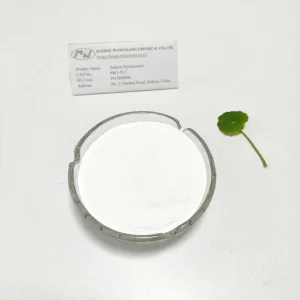
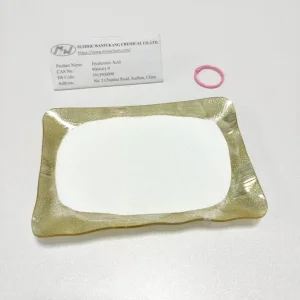
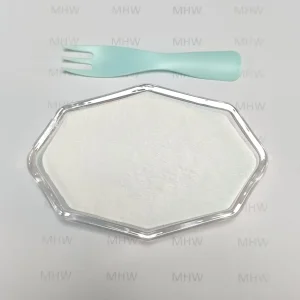
Explore our certified pharmaceutical, cosmetic, and food-grade sodium hyaluronate portfolios.
Decoding market growth drivers, clean-label raw materials, and the micro-environmental shifts.
The global hyaluronic acid raw material market is experiencing unparalleled expansion, driven by aging demographics and the exponential rise of the "clean beauty" movement. Industrially, the transition from animal-derived sources (e.g., rooster combs) to precision microbial fermentation has normalized high-yield, bio-compatible, and low-impurity supply lines, catering directly to stringent cosmetic and nutricosmetic standards.
Global commerce mandates standardized active ingredients. Major brands in North America, the European Union, and the Asia-Pacific region now strictly request certifications such as Halal, Kosher, and EcoCert. The demand for non-GMO, vegan fermentation-derived Sodium Hyaluronate is no longer a premium choice but a basic compliance baseline for international supply chains.
Modern analytical techniques like Size Exclusion Chromatography (SEC-MALLS) have elevated purity standards. Heavy metal limits, protein impurities, nucleic acid residues, and bioburden controls are strictly monitored. Industrial buyers are shifting from generic suppliers to technical partners capable of delivering customized molecular weight distributions for specific target applications.
Understanding molecular engineering, bio-fermentation controls, and modifications like acetylation.
Our raw material synthesis relies on optimized, non-pathogenic strains of Streptococcus zooepidemicus or recombinant Bacillus subtilis. Under strictly controlled aerobic conditions, these microorganisms metabolize glucose, peptone, and yeast extracts to synthesize high-purity linear glycosaminoglycans.
Ensuring absolute genetic stability and high-yield potential of the fermentation strain under strict sterile environments.
Real-time optimization of oxygen transfer rates, pH, temperature, and carbon-source feed to control molecular weight distributions (ranging from 10 kDa to 2.2 MDa).
Utilizing microfiltration, ultrafiltration, and ethanol precipitation to eliminate residual proteins, nucleic acids, and bacterial endotoxins, achieving ultimate cosmetic and food-grade purity.
The next frontier of hyaluronic acid synthesis centers on structural modifications and molecular weight customization. Chemical modification technologies, such as the introduction of acetyl groups, have yielded pioneering materials like Acetylated Sodium Hyaluronate (AcHA). This molecule exhibits dual lipophilic and hydrophilic traits, demonstrating remarkable skin affinity, long-lasting hydration, and stratum corneum repair properties.
Furthermore, synthetic biology is paving the way for enzymatic synthesis pathways that completely bypass traditional fermentation, minimizing carbon footprints while yielding ultra-low molecular weight (Oligo-HA) molecules with superior transdermal absorption profiles.
By 2028, enzymatic synthesis is projected to account for 30% of high-end skincare HA active ingredients, drastically reducing residual impurities and enhancing formulation stability across diverse pH ranges.

China is the global powerhouse for Hyaluronic Acid raw materials, commanding over 70% of the worldwide supply. This dominance is built on massive chemical clusters, optimized local raw material sourcing (such as glucose derived from local corn starch), and unparalleled economies of scale.
At Suzhou Wanfukang Chemical Co., Ltd., we combine this industrial efficiency with advanced custom logistics. Operating within these production clusters allows us to guarantee high-volume stability, seamless custom clearances, and competitive pricing schedules even amidst volatile global market conditions.
Our supply chain integrates direct raw material procurement, local lab verifications, temperature-controlled warehousing, and maritime agreements. This ensures that whether shipping to North America, Europe, or Latin America, lead times are compressed to 3-7 business days with transparent tracking.
Welcome to Suzhou Wanfukang Chemical Co., Ltd., an innovative chemical powerhouse founded in 2016. We specialize in the R&D, customization, and export of premium cosmetic ingredients and food additives. Based in China's advanced manufacturing hubs, our production networks represent years of technical maturity and quality control systems.
As a leading raw material supplier, we serve global brands and formulation labs by offering a comprehensive suite of services. From instant technical inquiries, in-house and third-party laboratory verification (HPLC, GC, MS), detailed factory audits, to specialized logistics, we manage the complete lifecycle of chemical procurement.
Contact UsFrom advanced cosmetic formulations to dietary supplements, select the optimal molecular weight.
Cosmetic formulations utilize multiple molecular weights for optimal hydration:
• High Molecular Weight (HMW-HA > 1.6 MDa): Forms a protective, breathable film on the skin surface, preventing transepidermal water loss (TEWL).
• Low Molecular Weight (LMW-HA 10-500 kDa): Penetrates deeper epidermal layers to restore moisture and smooth fine wrinkles.
• Oligo-HA (< 10 kDa): Targets the dermis to stimulate collagen expression and endogenous HA synthesis.
Orally administered Sodium Hyaluronate is rapidly absorbed in the intestinal tract and distributed to peripheral tissues, including skin and joints. Our Food-Grade Hyaluronic Acid (vegan fermentation-derived) is widely integrated into dietary supplement capsules, beauty drinks, and health gummies, offering systemic hydration and joint lubrication benefits.
With its high viscoelasticity, biocompatibility, and non-immunogenic profile, medical-grade Hyaluronic Acid is essential for ophthalmic viscosurgical devices (OVD), intra-articular injections for osteoarthritis, dermal fillers, and wound healing matrices. (Note: These applications require ultra-pure raw materials processed under strict GMP guidelines).
Comprehensive regulatory support, strict quality gates, and seamless logistics configurations.
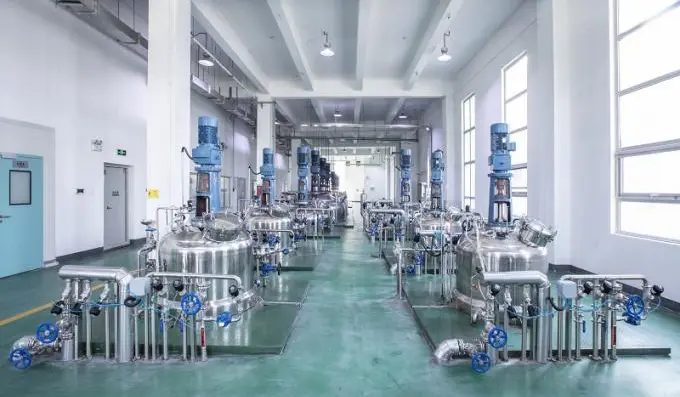
Leveraging our years of experience, advanced biotechnology, and continuous research, our quality fully meets market demands and customer requirements. Numerous customers have proven our commitment to quality through long-term use and repeat purchases. Quality is not only our core competitiveness, but also the cornerstone of our company's sustainable growth.
Our shipping methods are customized for each destination country, adjusting packaging based on current customs regulations to ensure smooth delivery. If a sample fails testing due to verified quality issues, we initiate an immediate reshipment process for a qualified replacement free of charge, covering all logistics costs.
Collaborate with our R&D lab to create custom molecular weights, tailored liquid formulations, or special packaging designs for your specific target applications.

In-depth responses to regulatory, chemical, and commercial questions from procurement managers.
Advanced chemical formulations, specialized molecular weights, and modified active raw materials.