Direct supply options for cosmetic formulating laboratories, brand builders, and manufacturing plants.
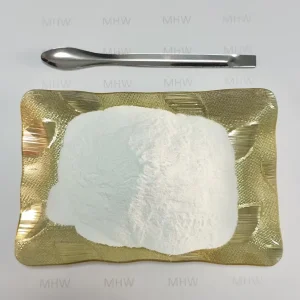
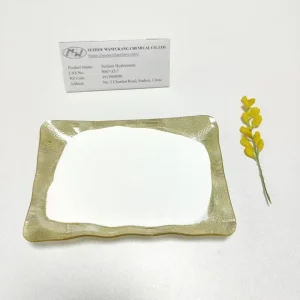
In contemporary cosmetic chemistry, the pairing of Vitamin C (L-Ascorbic Acid or its stable derivatives) and Hyaluronic Acid (Sodium Hyaluronate) represents one of the most clinically validated synergistic interventions for cutaneous aging. From a physiological standpoint, these two compounds target different biological mechanisms in the skin matrix, yet their combined topical administration yields a compounding efficacy profile far superior to their isolated applications.
L-Ascorbic Acid acts as an essential cofactor for prolyl hydroxylase and lysyl hydroxylase, enzymes that catalyze the hydroxylation of proline and lysine residues in procollagen, which is critical for collagen cross-linking and structural integrity. Sodium Hyaluronate, conversely, is a glycosaminoglycan that absorbs up to 1,000 times its molecular weight in water, filling the interstitial spaces of the extracellular matrix (ECM) and creating a highly hydrated microenvironment that facilitates cell migration, nutrient diffusion, and fibroblasts' structural signaling.
Formulating a stable serum combining these two ingredients requires advanced bio-chemical engineering. L-Ascorbic acid is notoriously unstable, prone to oxidation under exposure to light, heat, and air. This degradation pathway leads to the formation of dehydroascorbic acid and further down to erythrulose, causing the serum to turn yellow-brown and lose efficacy. The chemical pathway of this oxidation is highly pH-dependent, occurring rapidly at neutral to basic pH levels. To remain active, L-Ascorbic acid must be formulated at a pH below 3.5.
Conversely, Sodium Hyaluronate is a polymer that can undergo acid-catalyzed hydrolysis in highly acidic environments. When the pH drops below 3.0, the glycosidic bonds linking the D-glucuronic acid and N-acetyl-D-glucosamine monomers begin to break down, resulting in depolymerization. This molecular degradation decreases viscosity and diminishes the moisture-retention properties of the macromolecule.
To overcome this incompatibility, modern cosmetic factories and laboratories utilize specific derivative compounds. Key industry solutions include:
The global demand for high-performance active cosmetics is undergoing a paradigm shift. According to recent market analysis, clean beauty configurations, clinical-grade efficacy statements, and transparent sourcing are driving purchase decisions from large multinational brands down to indie private labels. Sourcing departments no longer evaluate suppliers solely on price per kilogram; they demand comprehensive analytical verification, raw material traceability, and proof of sustainable synthesis.
Key procurement requirements now prioritize raw materials produced via microbial fermentation (for Hyaluronic Acid) over legacy extraction methods. Fermentation via non-pathogenic strains (e.g., Streptococcus zooepidemicus) yields a high-purity, vegan-friendly ingredient with highly controllable molecular weight distributions, which is essential for uniform cosmetic batch manufacturing.
For Vitamin C, the priority is on oxidation-resistant packaging solutions, micro-encapsulation options, and bulk supply chains that assure freshness, minimizing the warehousing duration of bulk powders before formulation blending.

The manufacturing architecture for cosmetic active ingredients in China has transitioned from traditional labor-intensive production lines to fully automated, digitally managed smart factories. Industry 4.0 technologies are deeply integrated into synthesis and extraction processes, guaranteeing consistent batch qualities, minimization of human error, and optimized environmental footprints.
For ingredients like Sodium Hyaluronate, Chinese factories lead globally due to automated bio-fermentation tanks equipped with real-time sensor arrays. These sensors monitor temperature, dissolved oxygen levels, pH, and nutrient feed rates dynamically. This level of process control ensures that the resulting hyaluronic acid polymer meets exact molecular weight targets—whether producing Ultra-Low Molecular Weight HA (3,000 to 10,000 Daltons) for rapid cutaneous absorption, or High Molecular Weight HA (exceeding 1.8 Million Daltons) for surface barrier applications.
Additionally, modern supply chain resilience in China relies on vertical cluster integration. Production plants for precursors, enzymes, and purification machinery are situated in close geographical proximity to key formulation centers, ensuring stable lead times even amidst global macroeconomic disruptions. Suzhou Wanfukang Chemical Co., Ltd. leverages this dynamic infrastructure to deliver reliable, high-purity cosmetic raw materials globally, with fully integrated logistics and quality assurance protocols.
Founded in 2016, Suzhou Wanfukang Chemical Co., Ltd. is an innovative company specializing in the development and export of cosmetic and food ingredients. Our production base is located in China and boasts many years of experience and is highly established.
As a top raw material supplier in various sectors in China, we offer a wide range of raw materials and provide comprehensive services including: Inquiries, Technical support, Orders, Quality control, In-house and third-party laboratory testing, Factory audits, Logistics, Warehousing, and complaint handling.
Our commitment to excellence ensures that global brands receive not only premium chemical compounds, but also the compliance documentation, regulatory support, and delivery security needed to maintain high manufacturing throughput.
Delivering certified cosmetic ingredients to North America, Europe, Asia and beyond.
A comprehensive operations and quality infrastructure designed to minimize global procurement risks.
Leveraging our years of experience, advanced technology, and continuous research, our quality fully meets market demands and customer requirements. Numerous customers have proven our commitment to quality through long-term use and repeat purchases. Quality is not only our core competitiveness, but also the baseline of our brand partnership.
Our shipping methods vary depending on the specific country. Our packaging is constantly updated and improved based on the latest customs regulations. We guarantee that you will receive your product within 3-7 business days, utilizing optimized logistics channels for delicate active ingredients.
We offer a comprehensive product line, covering a variety of raw material powders and liquid formulations to meet the needs of various industries and applications. Whether for industrial processing, laboratory research and development, or specialized applications in specific fields, we can find the right solution for you.
We are customer-centric and provide comprehensive pre-sales and after-sales support. During the pre-sales phase, our professional team will recommend suitable products based on customer needs and answer technical questions. During the after-sales phase, we will continuously monitor customer usage and promptly resolve any issues.
We prioritize customer protection. If a sample fails testing and is confirmed to be a quality issue, we will immediately initiate a reshipment process and resend a qualified sample or ordered product free of charge. We will also cover any associated logistics costs to maintain confidence and security.
Adapting products to regional target demographics is essential for product line success. Environmental factors, local regulatory constraints, and consumer preferences dictate how Vitamin C and Hyaluronic Acid serums should be formulated and stored.
In North America, consumer preference aligns with clinical transparency. High-concentration serums (e.g., 15% to 20% L-Ascorbic Acid) stabilized with Ferulic Acid and Vitamin E are dominant. The target regulatory pathway relies heavily on FDA compliance under MoCRA, demanding rigorous ingredient safety substantiation and GMP compliance in sourcing.
European Union regulations (EU Regulation 1223/2009) enforce strict safety thresholds and environmental regulations. Sourcing agents in Europe prefer raw materials certified by EcoCert or COSMOS. Formulations often substitute pure L-Ascorbic Acid with stable, gentler derivatives such as Ascorbyl Glucoside to avoid skin irritation, combined with non-animal sourced, bio-fermented Hyaluronic Acid of medium molecular weights.
In countries like Japan, South Korea, and China, the focus is on skin whitening, barrier repair, and texture refinement. Formulas pairing 3-O-Ethyl Ascorbic Acid with Arbutin or Niacinamide are highly sought after to synergize with Sodium Hyaluronate's hydrating matrix. The sensory profile must be extremely light, non-sticky, and rapidly absorbed, necessitating ultra-low molecular weight hyaluronic acid components.
Critical answers for sourcing managers, chemical formulators, and compliance specialists regarding active ingredient sourcing.
Explore specialized grades for nutraceuticals, advanced topical applications, and high-stability formulations.
Whether you are scaling an active skincare formulation or seeking high-purity bulk raw material delivery, our technical sales specialists will engineer a customized supply configuration matching your specifications.